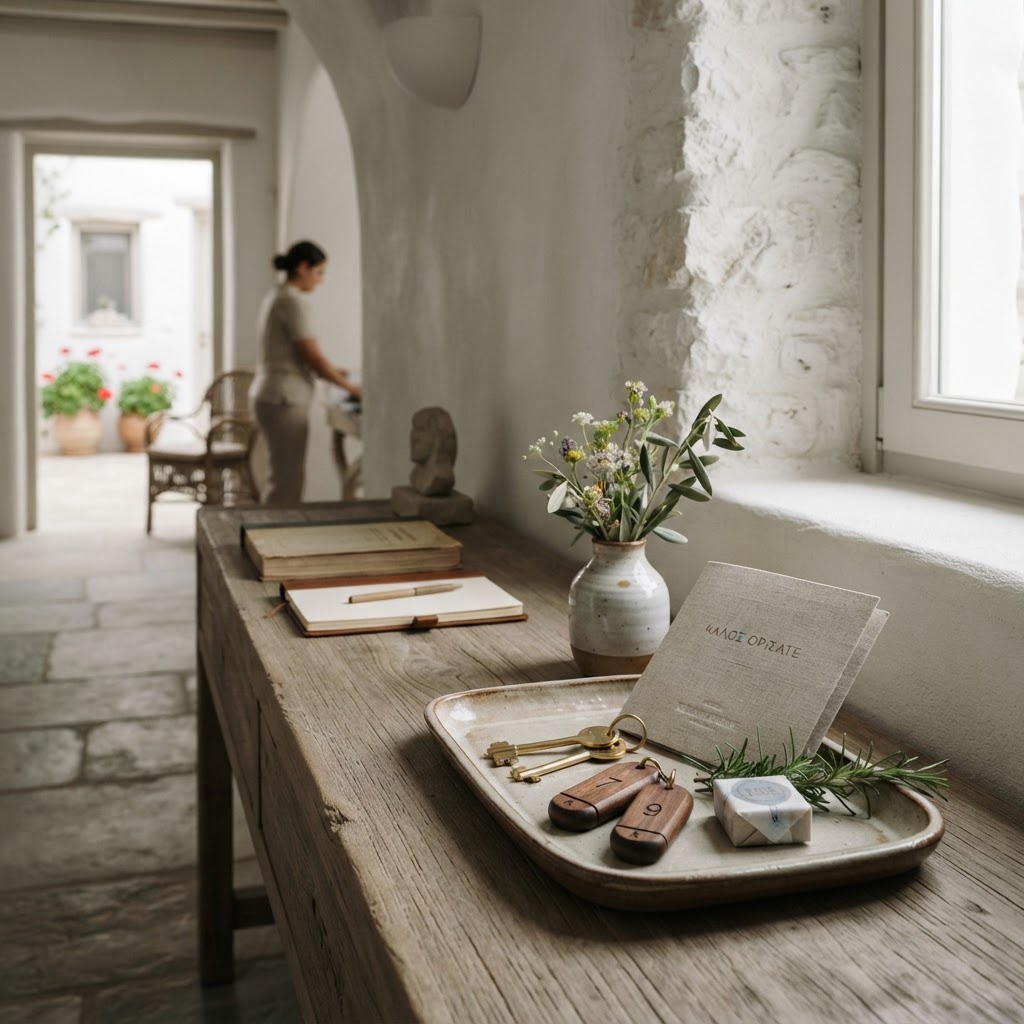
Introduction: The Reality of Hosting in Greece
Greece's booming short-term rental market brings incredible opportunities for property managers in Athens, the Cyclades, Crete, and mountain retreats like Arachova. With millions of tourists visiting annually, the vast majority of guests are respectful and appreciative. However, every host will eventually encounter a challenging situation — a noise complaint from neighbors in Kolonaki, a disputed damage claim after a Mykonos villa stay, or a last-minute cancellation dispute from a Santorini booking. How you handle these moments defines your reputation, your review score, and ultimately your income.
Professional conflict resolution is not just about keeping the peace. It is about protecting your business while maintaining the warm, filoxenia-inspired hospitality that Greece is globally famous for.
Understanding the Most Common Guest Complaints in Greece
Before you can resolve conflicts, you need to anticipate them. In the Greek market, the most frequently reported issues include:
- Misleading property descriptions — guests expecting sea views that are partially obscured, or air conditioning that is underpowered for August heat
- Noise and neighborhood disruption — particularly relevant in Athens neighborhoods like Psiri or Exarchia, and party-focused islands like Ios
- Cleanliness standards — high turnover during peak summer season can lead to rushed cleaning
- Wi-Fi and amenity failures — remote island properties frequently experience connectivity issues
- Check-in complications — delayed arrivals on island ferries creating lockbox or key handover problems
Identifying your property's specific vulnerabilities allows you to address them proactively in your listing and guest communication.
Practical Conflict Resolution Strategies
Stay Calm and Respond Quickly
When a guest sends an angry message at midnight because the air conditioning has failed in a Paros apartment during July, your first instinct may be to become defensive. Resist it. Respond within 30 minutes if possible, acknowledge the issue without admitting liability, and immediately offer a solution.
Example response:
"Dear Maria, I sincerely apologize for this inconvenience. I completely understand how uncomfortable this is, especially in July. I am contacting a technician right now and will follow up within one hour with a confirmed arrival time."
This response demonstrates empathy, urgency, and professionalism — three qualities that frequently transform a one-star threat into a four-star review.
Use the "Acknowledge, Apologize, Act" Framework
Regardless of who is at fault, follow this three-step approach:
- Acknowledge the guest's experience and feelings without immediately debating facts
- Apologize for the inconvenience — this is not an admission of fault, it is a courtesy
- Act with a concrete, immediate solution or timeline
This framework works equally well over message, phone, or in-person conversation.
Navigating Refund Policies Professionally
Refund disputes are among the most financially and emotionally draining aspects of hosting. Having a clear, documented policy is your strongest protection.
Setting Clear Policies Upfront
Your cancellation and refund policy should be:
- Visible in your listing description, not buried in house rules
- Consistent with platform policies (Airbnb, Booking.com, VRBO)
- Realistic for your market — a strict policy on a Santorini cliffside villa is more commercially acceptable than on a budget Athens studio
Real-World Case Study: The Arachova Ski Chalet
A property manager in Arachova received a refund request two days before a February booking when the guest claimed unexpected work obligations. The property had a strict 30-day cancellation policy clearly stated in the listing. Rather than refusing outright, the manager offered to refund 50% if the dates could be rebooked — which they were within 24 hours during peak ski season. The guest received a partial refund, the property lost no revenue, and the guest left a positive review acknowledging the manager's flexibility.
Key takeaway: Creative solutions often satisfy guests while protecting your income.
When to Offer Full Refunds
There are situations where a full refund is both ethical and strategically wise:
- Significant misrepresentation in your listing that you cannot immediately remedy
- Serious maintenance failures that make the property uninhabitable (no water, pest infestation, structural issues)
- Natural disasters or government travel restrictions affecting access
Offering a prompt, no-argument refund in these circumstances protects your reputation far more than any disputed amount.
Damage Control: Protecting Your Property and Your Reputation
Document Everything Before and After
Implement a standardized check-in and check-out inspection process with timestamped photographs. This is especially important for high-value properties on the Greek islands where replacement costs for local artisan furniture or traditional ceramics can be significant.
Real-World Case Study: Post-Party Damage in a Rhodes Villa
A Rhodes villa host discovered significant damage after a group booking — broken outdoor furniture, stained linens, and a damaged pool filtration system. Because the host had photographic check-in documentation and had collected a security deposit through Airbnb's damage protection system, they successfully filed a claim and recovered approximately 80% of repair costs. The claim was processed smoothly because the evidence was organized and submitted within the platform's required timeframe.
Key takeaway: Documentation is your most powerful tool — not confrontation.
Managing Negative Reviews After Conflicts
If a difficult guest leaves a negative review, always respond publicly with professionalism and factual clarity. Future guests read host responses as carefully as the reviews themselves. A measured, respectful reply demonstrates maturity and trustworthiness.
Building a Long-Term Culture of Professional Hospitality
The most successful property managers in Greece — whether managing a portfolio of Athens apartments or a boutique collection of Cycladic villas — understand that difficult guest situations are not interruptions to their business. They are part of it.
Invest in clear communication templates, train your cleaning and maintenance teams to report issues immediately, build relationships with reliable local contractors for rapid-response repairs, and always approach conflict from a solutions-oriented mindset.
Greek hospitality has a 3,000-year tradition behind it. When you handle difficult situations with grace, patience, and professionalism, you are not just protecting your property — you are honoring that tradition and building a rental business that stands apart in one of the world's most competitive tourism markets.