Why Your Welcome Book Is the Most Underrated Tool in Your Rental Arsenal
Picture this: It's midnight, your guests have just arrived at your villa in Santorini after a long flight from London. They can't find the Wi-Fi password, they're unsure whether they can hang towels on the terrace railing, and they have no idea where to eat breakfast within walking distance. Their first WhatsApp message to you arrives at 12:15 AM.
Sound familiar?
A well-crafted welcome book eliminates this scenario entirely. For property managers and hosts across Greece — whether you're running a city apartment in Kolonaki, a cycladic villa on Mykonos, or a ski chalet in Arachova — a thoughtful welcome book transforms confused arrivals into confident, happy guests. And happy guests leave five-star reviews.
What a Welcome Book Should Actually Contain
Many hosts make the mistake of creating a welcome book that reads like a legal document. Long lists of restrictions, liability warnings, and checkout procedures leave guests feeling like tenants, not travelers. The goal is balance: clear house rules wrapped in warm hospitality.
A complete welcome book should include:
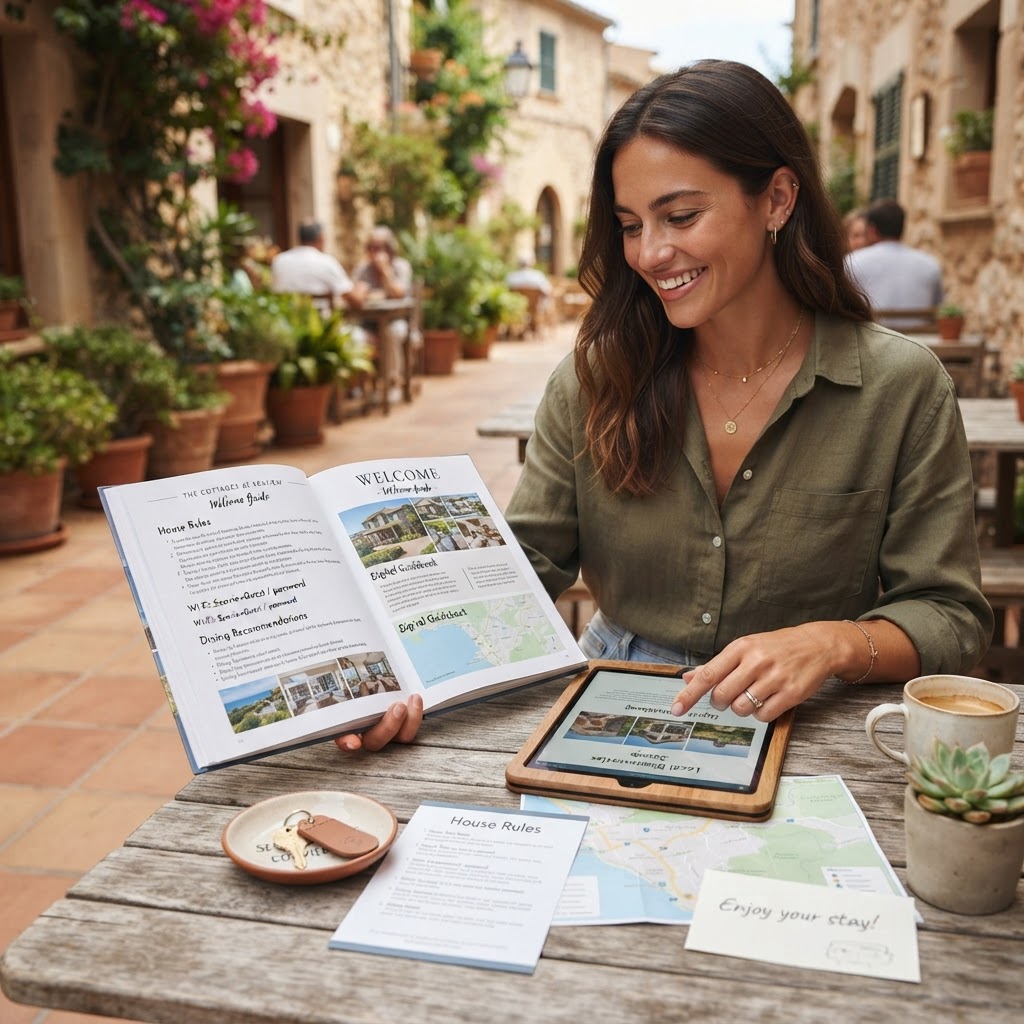
- Property essentials — Wi-Fi credentials, appliance instructions, heating/AC controls, emergency contacts
- House rules — presented kindly but clearly
- Local recommendations — restaurants, beaches, pharmacies, transport
- Cultural context — especially useful for international guests unfamiliar with Greek customs
- Emergency information — nearest hospital, local police, property manager's contact
Writing House Rules That Guests Actually Respect
The tone of your house rules sets the entire atmosphere of the guest experience. Compare these two approaches:
❌ "No parties. No smoking. No extra guests. Violations will result in immediate eviction and loss of deposit."
✅ "We want you to relax and enjoy every moment here. To keep this space special for everyone, we kindly ask that gatherings remain intimate, smoking stays on the outdoor terrace, and the guest count matches your booking."
Both communicate the same rules. Only one makes guests feel welcome.
Practical tips for Greek properties specifically:
- Water conservation notices are essential on islands like Hydra, Paros, or Milos where fresh water is limited. Frame it as environmental awareness, not restriction.
- Noise curfews should reference local Greek culture — many neighborhoods have a midday rest period (mesimeri) between 2:00–5:00 PM, which many international guests don't know about.
- Recycling and waste — explain the local system, since bin colors and collection days vary significantly between municipalities.
- Footwear policies — if you have marble or tiled floors, a gentle request to remove shoes indoors resonates well with Asian and Northern European guests.
Local Recommendations: Your Secret Weapon for Reviews
This section alone can be the difference between a four-star and five-star review. Guests crave authentic local knowledge — the kind that doesn't appear on the first page of Google results.
Real-World Example — Athens City Apartment:
Maria, a Superhost managing six apartments in Pangrati and Mets, includes a hand-picked list of neighborhood cafés, her favorite souvlaki spot on Formionos Street, and a note about the best time to visit the Acropolis Museum (Tuesday mornings, when tour groups are fewer). Her welcome book has a dedicated section called "What the Locals Do" — and it's the most photographed page by her guests.
Real-World Example — Island Villa in Naxos:
Kostas manages four properties near Agios Prokopios beach. His welcome book includes a seasonal restaurant guide — different recommendations for July versus October — plus a hand-drawn map marking hidden coves accessible only by foot. Guests regularly mention these tips in reviews, and his average rating has held at 4.97 for two consecutive years.
Real-World Example — Mountain Chalet in Arachova:
Elena runs a cozy stone house near the Parnassos ski center. Her welcome book includes ski rental shop comparisons with honest notes about each, a list of traditional tavernas serving spetzofai and trachanas, and a warning about road conditions during heavy snowfall. International guests particularly appreciate the practical mountain safety guidance, which they wouldn't think to research independently.
Going Digital: Why You Should Consider a Digital Guidebook
Physical welcome books are charming, but digital guidebooks are functional. Tools like Hostfully, Tourmio (popular in the Greek market), or even a simple Notion page or Google Site allow you to:
- Update information instantly without reprinting
- Include clickable links to restaurant reservations, Google Maps directions, and taxi apps
- Send the guidebook link before arrival so guests can plan ahead
- Track which sections guests view most
For hosts managing multiple properties across different islands or regions, a digital system is practically essential. You can maintain a master template and customize per property in minutes.
Tip: Include a QR code in your physical welcome book that links to the digital version. This gives guests the warmth of a printed booklet alongside the convenience of a smartphone-friendly guide.
Formatting Tips for Maximum Readability
Regardless of format, structure matters:
- Keep sections short and scannable
- Use icons or emojis to separate categories (🍽️ Restaurants, 🏖️ Beaches, 🚗 Getting Around)
- Lead with the most urgent information (Wi-Fi, check-out time) on page one
- Include a "Quick Reference" card for essential numbers and instructions
The Business Case for Investing Time Here
A well-designed welcome book reduces host-guest communication by an estimated 30–40%, according to experienced Superhost communities. Fewer late-night messages, fewer misunderstandings, fewer disputes about deposits.
More importantly, it signals professionalism. In an increasingly competitive Greek short-term rental market — where new listings on Airbnb and Booking.com grow every season — the details that demonstrate care are exactly what separates forgettable stays from memorable ones.
Final Thoughts
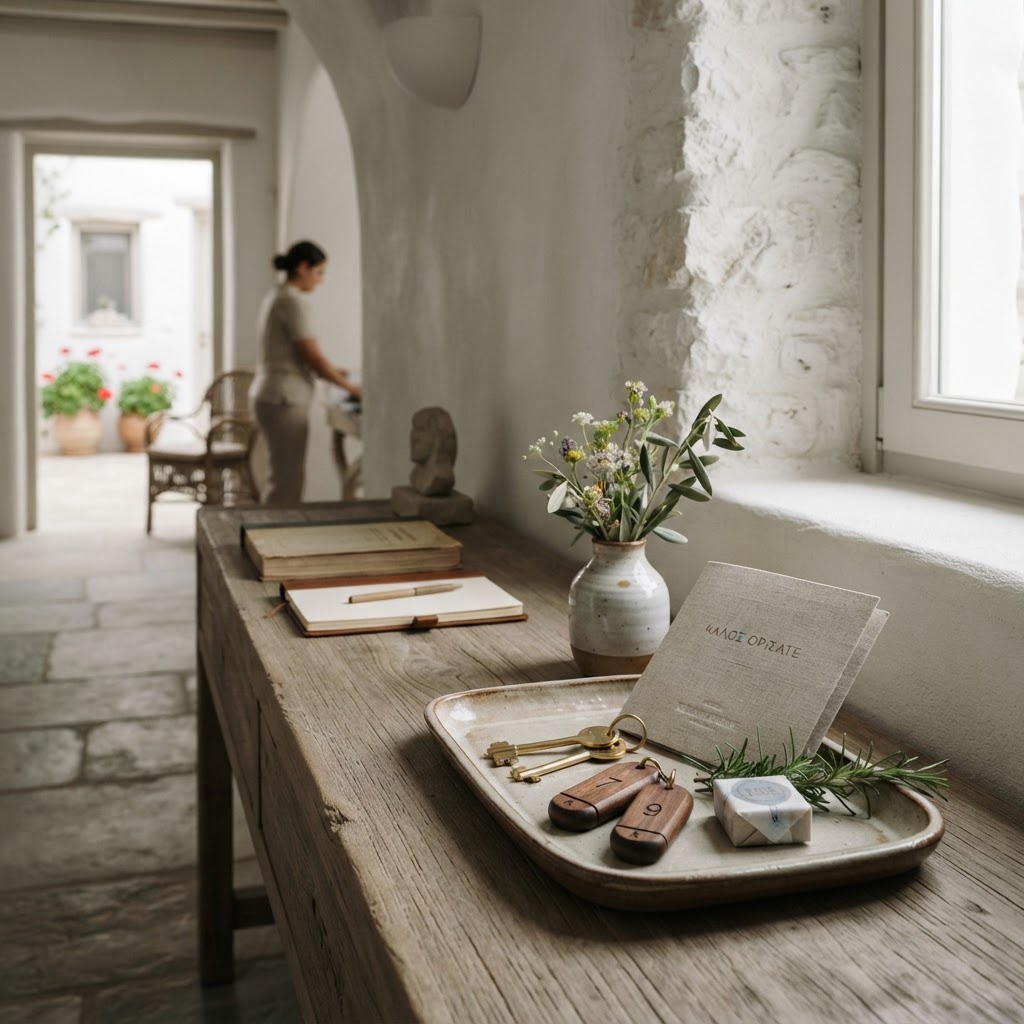
Your welcome book is more than a manual. It's a hospitality statement. It tells guests that someone thought about their comfort before they even arrived, that the property has a personality, and that the local neighborhood has stories worth discovering.
Whether you're welcoming a couple on their honeymoon in Oia or a ski group arriving in Arachova on a Friday night, a thoughtful welcome book sets the tone for everything that follows.
Invest two hours creating yours. Your reviews will thank you.