The Rise of Remote Work Tourism in Greece
Greece is redefining travel as digital nomads swap city offices for sun-soaked islands and ancient villages—work and wanderlust have never looked so good.
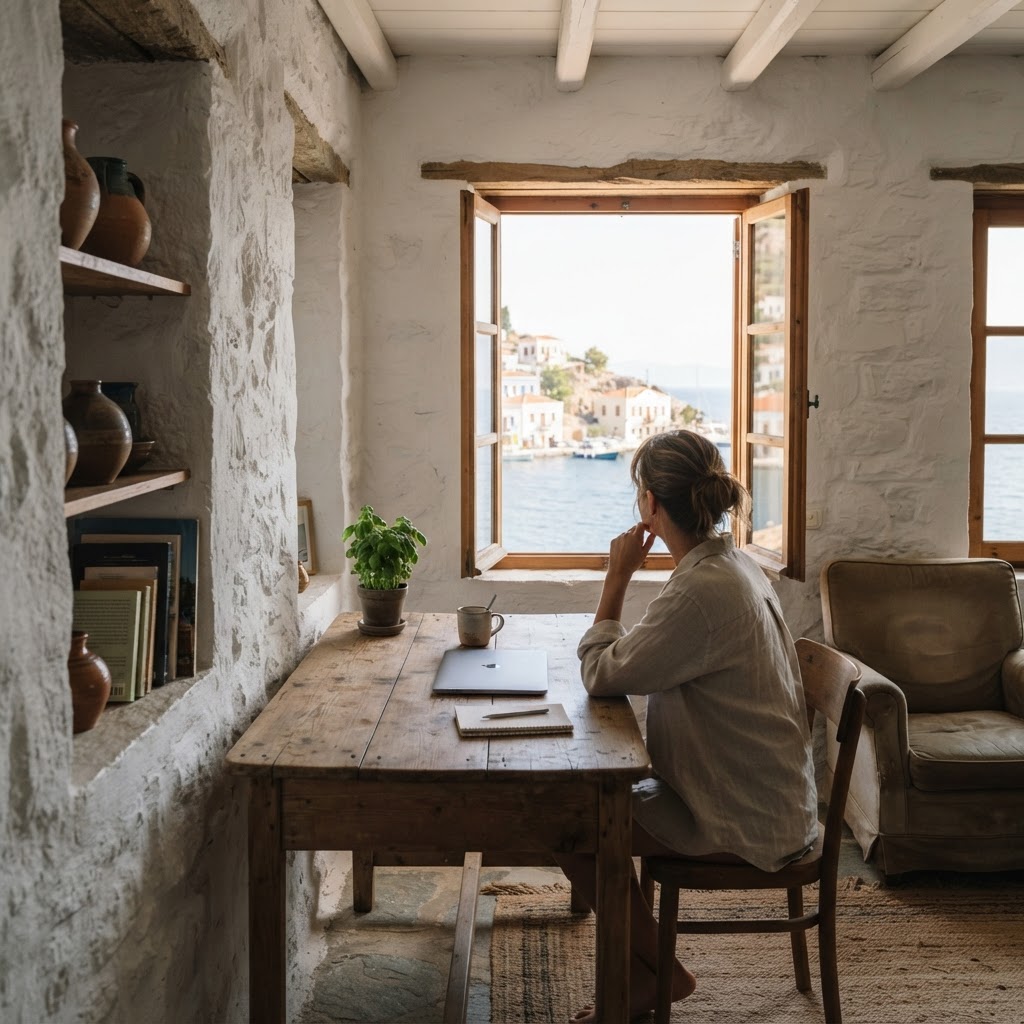
How Digital Nomads Are Reshaping Greek Rental Demand
Greece has always been a destination that captures the imagination — ancient ruins, crystalline waters, and a culture built on hospitality and community. But something fundamental has shifted in recent years. The travelers arriving on Greek shores are no longer just sun-seekers counting down seven days until their return flight. A growing segment of visitors are coming with laptops, ergonomic keyboards, and plans to stay for months at a time. The rise of remote work tourism is quietly transforming the Greek rental market, and property managers who understand this shift stand to benefit enormously.
Understanding the Digital Nomad Traveler
Remote work tourism is not a passing trend. Since 2020, the number of professionals working location-independently has grown exponentially. According to MBO Partners, over 17 million Americans identified as digital nomads in 2023 — a figure that doesn't account for the millions more based in the UK, Germany, the Netherlands, and Scandinavia, all of whom consider Greece a prime destination.
These travelers are distinct from traditional tourists in several important ways:
- Longer stays: Average bookings range from 3 to 6 weeks, with many extending to 2–3 months
- Higher spending power: Remote workers often earn salaries from high-cost economies while spending in euros
- Different priorities: They value reliable Wi-Fi, dedicated workspaces, and proximity to amenities over beach proximity alone
- Repeat visits: Digital nomads who enjoy a destination often return seasonally, creating loyal, recurring guests
For Greek hosts, this represents a significant revenue opportunity — particularly during the traditionally quieter shoulder seasons of March through May and October through November.
Why Greece Is Winning the Digital Nomad Market
Greece introduced its Digital Nomad Visa in 2021, allowing non-EU remote workers to live in the country for up to 12 months (renewable). This policy signal was powerful — it positioned Greece not just as a holiday destination but as a legitimate base for professional life.
Beyond policy, the practical appeal is undeniable. Greece offers:
- Affordable cost of living compared to Western European capitals
- Excellent climate for 9–10 months of the year
- Direct flight connections to major European and international hubs
- Rich cultural infrastructure including coworking spaces, cafés, and a growing expat community
Athens in particular has emerged as an unexpected digital nomad hub, with neighborhoods like Monastiraki, Kolonaki, and Koukaki filling with long-term laptop workers who want urban infrastructure alongside Mediterranean lifestyle.
Destination Spotlights: Where Demand Is Growing
Athens
The capital has seen a notable increase in monthly rental demand, particularly in centrally located apartments with strong internet connectivity. Platforms like Spotahome and Flatio — specifically designed for medium-term stays — report Athens among their fastest-growing markets. Hosts offering furnished apartments with dedicated desk space in Exarchia or Pagrati are commanding premium monthly rates from verified remote workers.
The Islands: Crete, Rhodes, and Paros
Larger islands with year-round populations are proving particularly attractive. A property manager in Heraklion, Crete reported in 2023 that by marketing a portfolio of three apartments specifically to remote workers — adding fiber internet, standing desks, and a dedicated monitor — average booking length increased from 4 days to 26 days, dramatically reducing turnover costs and vacancy gaps.
Paros has become something of a case study in itself. The island's blend of authentic village life, reliable ferry connections, and a small but active expat community has made it a word-of-mouth favorite among European digital nomads. Several property owners have formed informal networks, sharing guests between properties during busy periods.
Arachova
Less obvious but increasingly significant, this mountain village near Delphi attracts a different kind of remote worker — those seeking cooler temperatures in summer and a quieter, more focused environment. A boutique guesthouse owner in Arachova began offering "work retreat" packages in 2022, bundling accommodation with high-speed internet, a dedicated work lounge, and curated local experiences. The result was a fully booked calendar from September through November — months that previously saw near-zero occupancy.
Practical Tips for Hosts Attracting Digital Nomads
Capturing this market requires deliberate preparation. Here's what experienced hosts recommend:
Upgrade Your Infrastructure First
- Install fiber broadband with a minimum speed of 100 Mbps — and test it regularly
- Provide a backup mobile data solution (a local SIM with data package costs very little)
- List your actual internet speed in your property description with a screenshot from a speed test
Design for Work, Not Just Sleep
- Add a proper desk and chair — this is non-negotiable for remote workers
- Ensure adequate lighting at the workstation
- Consider an external monitor as an amenity; guests will specifically search for this
Adjust Your Pricing and Policies
- Offer meaningful weekly and monthly discounts (15–30% for stays over 28 days)
- Adapt your cancellation policy to be more flexible for long-term bookings
- Consider utility-inclusive pricing for monthly stays to simplify decision-making
Market in the Right Places
- List on platforms like Flatio, Nomad Stays, and Workfrom alongside Airbnb and Booking.com
- Use keywords like "remote work friendly," "fast WiFi," and "dedicated workspace" in titles and descriptions
- Engage with digital nomad communities on Facebook groups such as Digital Nomads Greece
The Bigger Picture for Greek Property Managers
The digital nomad market offers something traditional tourism rarely provides: predictability. Longer stays mean fewer gaps between bookings, lower cleaning and management costs per revenue euro, and guests who genuinely invest in their temporary home.
Greece's combination of quality-of-life, visa accessibility, and authentic culture has created a rare competitive advantage. But hosts who want to capture this audience must meet it with intentionality — upgrading facilities, adjusting pricing strategies, and actively marketing to communities where remote workers gather.
The travelers have already arrived. The question for Greek property managers is whether their listings are ready to welcome them for weeks, not just weekends.
Stay Ahead in Hospitality
Monthly insights on short-term rental strategies, Airbnb optimization, property management and the hospitality market in Greece.
Considering professional management?
Tell us about your property in Athens, the Athenian Riviera or Arachova and we’ll assess whether Clarity is a suitable fit.
Discuss Your Property